COMING SOON: Website under construction. Check back in Later
A Neurodivergent-Affirming Language Guide
This guide introduces a set of neurodivergent-affirming translations- shifting from deficit-based labels to process-based understanding.
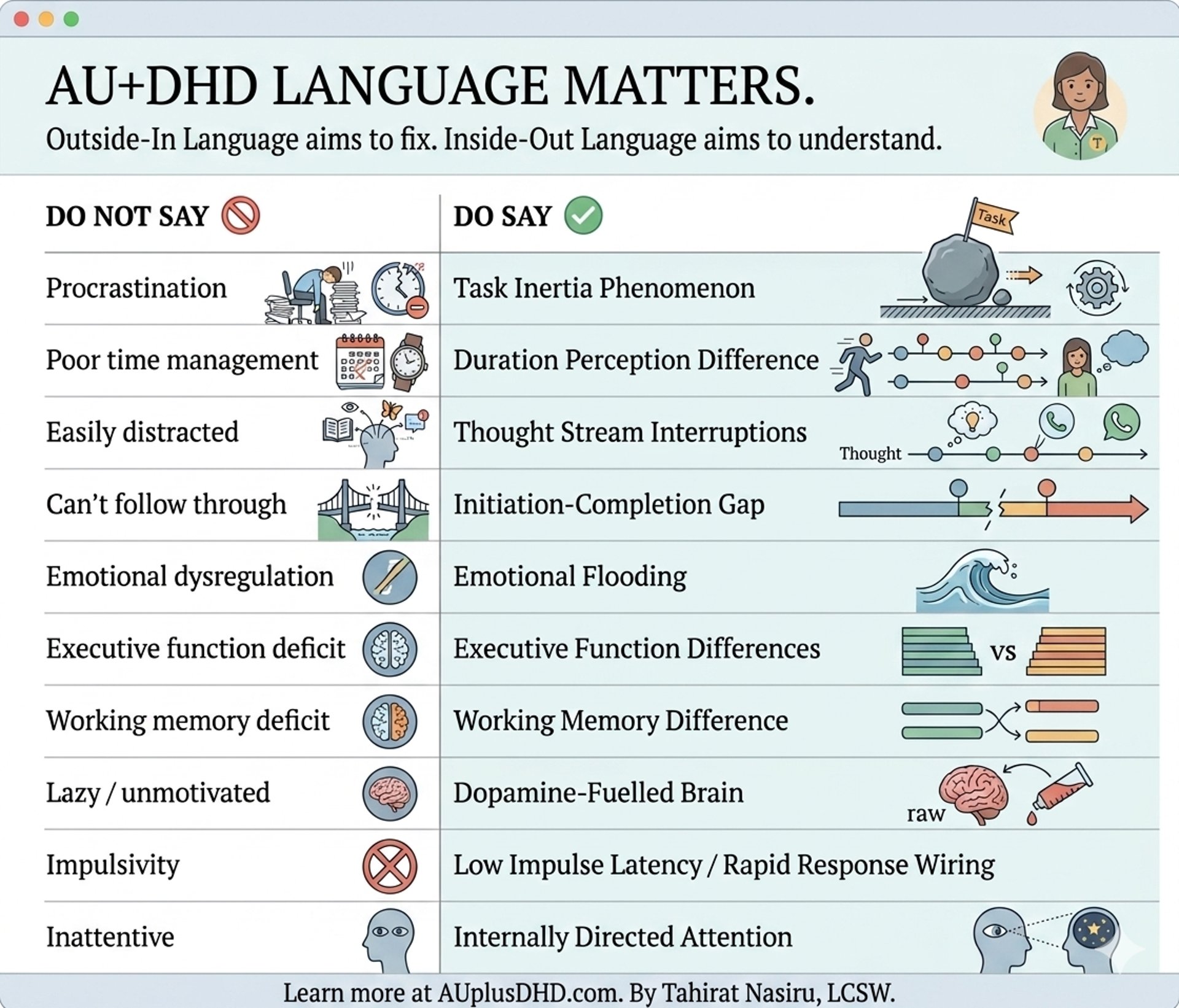
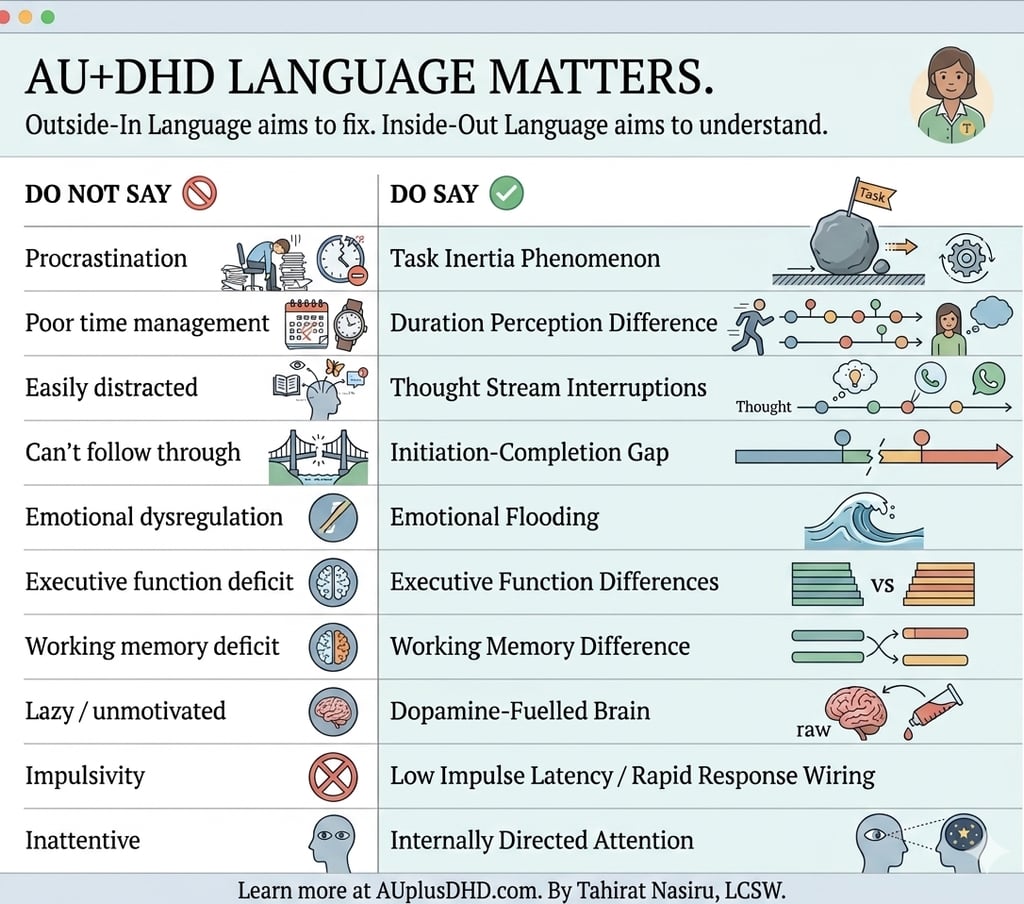
"Language Matters. Outside-in language aims to fix. Inside-out language aims to understand"
- Tahirat Nasiru, LCSW
The Problem with “Outside-In” Language
Traditional language describes behavior from the outside looking in. It labels what is visible, but ignores what is happening internally.
For example, terms like, “procrastination”, “lazy”, “inattentive”, “poor follow-through”, although well meaning, assume that the individual lacks effort, lacks motivation or lacks discipline.
But for many neurodivergent individuals, that’s not what’s happening at all.
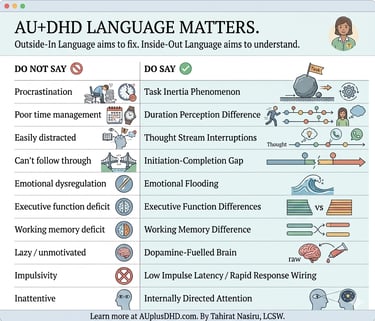
What Changes When You Shift the Language
1. Behavior Starts to Make Sense
“Procrastination” becomes Task Inertia → A difficulty with activation, not avoidance
2. Shame Begins to Decrease
“Lazy” becomes Dopamine-Fueled Brain → A brain that requires interest, novelty, or urgency to engage
3. Support Becomes More Effective
“Can’t follow through” becomes Initiation–Completion Gap → A need for support across transitions, not just starting
4. Communication Improves
“Easily distracted” becomes Thought Stream Interruptions → Competing attention streams, not lack of focus
This Is Not Just Semantics
Language influences:
how clinicians assess
how families respond
how individuals see themselves
When language is inaccurate:
interventions miss the mark
relationships become strained
shame increases
When language reflects internal experience:
support becomes targeted
empathy increases
change becomes possible
Try The Interactive Flip card
Click on each flip card to view its reframed alternative
Who This Is For
Neurodivergent Individuals: To help you understand your patterns without defaulting to self-blame
Families & Partners: To help you interpret behavior more accurately and respond with clarity instead of frustration
Clinicians & Educators: To support a more precise, affirming, and effective lens in your work.
A Simple Shift You Can Start Today
Before labeling a behavior, pause and ask: “If this wasn’t a character flaw… what else could be happening here?” That question is the beginning of the shift.
Important Note
These reframes are not about ignoring challenges. They are about:
describing them more accurately
understanding the mechanisms behind them
responding in ways that actually support change
When we change the language, we change the lens. When we change the lens, we change the outcome.
Explore Visual Explanations
Click on each visual explainer to understand AU+DHD from inside out
"A picture says a thousand words"
Understanding Autism, ADHD and AUDHD through images, metaphors and analogies.

"A picture is worth a thousand words"


Copyright @ TNAZ Designs & Services, LLC
“If you love someone with AU+ DHD (Autism, ADHD, and AuDHD) and feel confused, this is your translation guide.”