AU+DHD Reframe Lexicon
A nuero-affirming language guide based on the AU+DHD inside-out framework.
"Language Matters. Outside-in language aims to fix. Inside-out language aims to understand"
- Tahirat Nasiru, LCSW
What is the inside-out framework?
Instead of defining autism, ADHD, or AuDHD by external behaviors (what a clinician observes), this approach prioritizes lived experience, internal sensory and cognitive processes, and self-reported reality
What is it?
What is the AU+DHD reframe Lexicon ?
This guide introduces a set of neurodivergent-affirming translations that is based on an inside -out framework-- shifting from deficit-based labels to process-based understanding.
What is the inside-out framework?
Language shapes how we understand ourselves.
Many commonly used clinical terms describe neurodivergent experiences from the outside looking in. They focus on what appears to be missing rather than what is actually happening internally (internal sensory and cognitive processes ).
Whenever possible, we use language that describes the experience rather than assigning a deficit.
For example:
Time Blindness → Time Perception Difference
Emotional Dysregulation → Emotional Flooding
Rejection Sensitive Dysphoria → Rejection Flooding
Executive Dysfunction → Executive Function Challenges
These terms are not official diagnostic labels. They are educational language designed to make lived experiences easier to understand while reducing unnecessary shame.
I. View The Interactive Guide
II. What to learn more? Read this
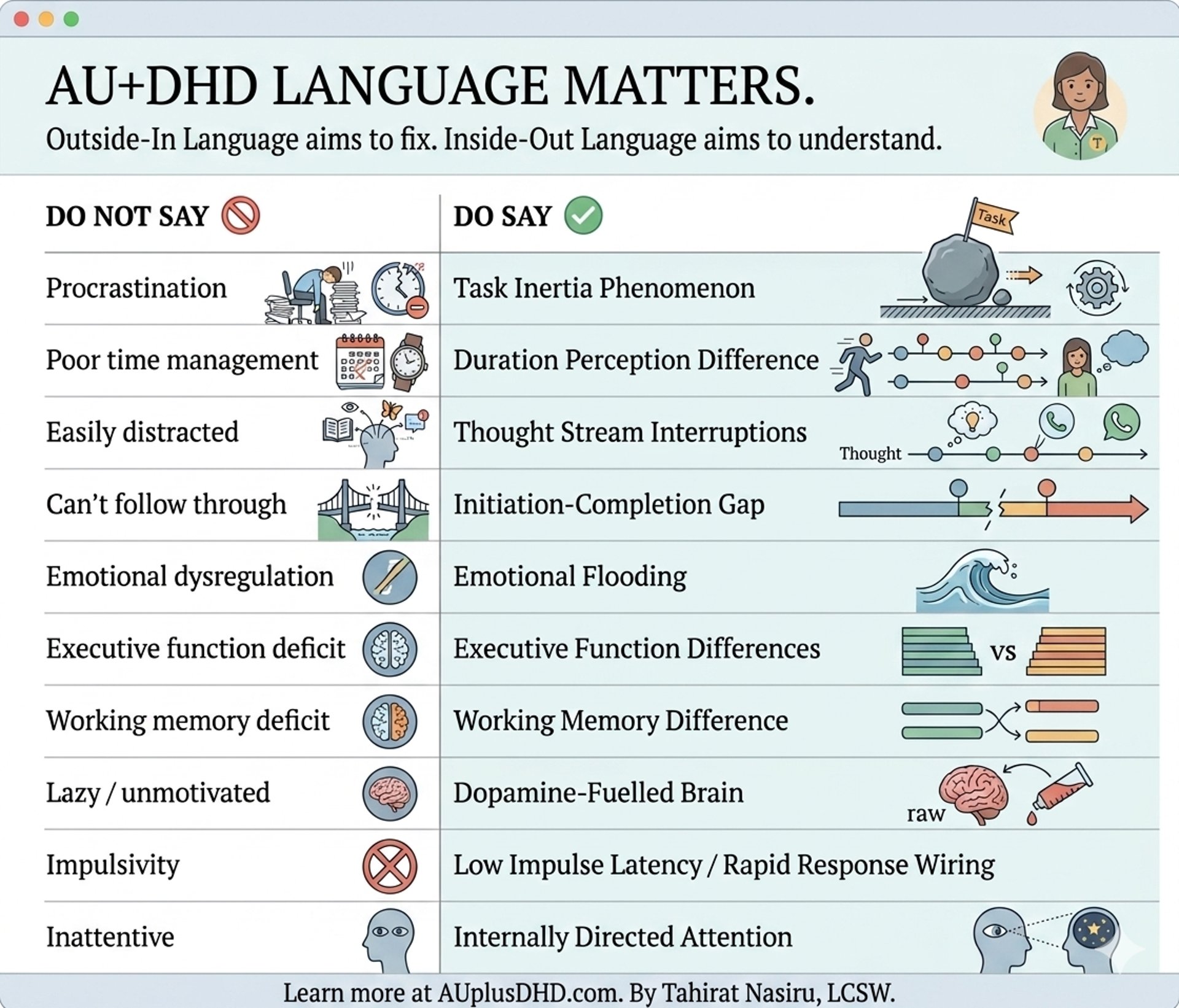
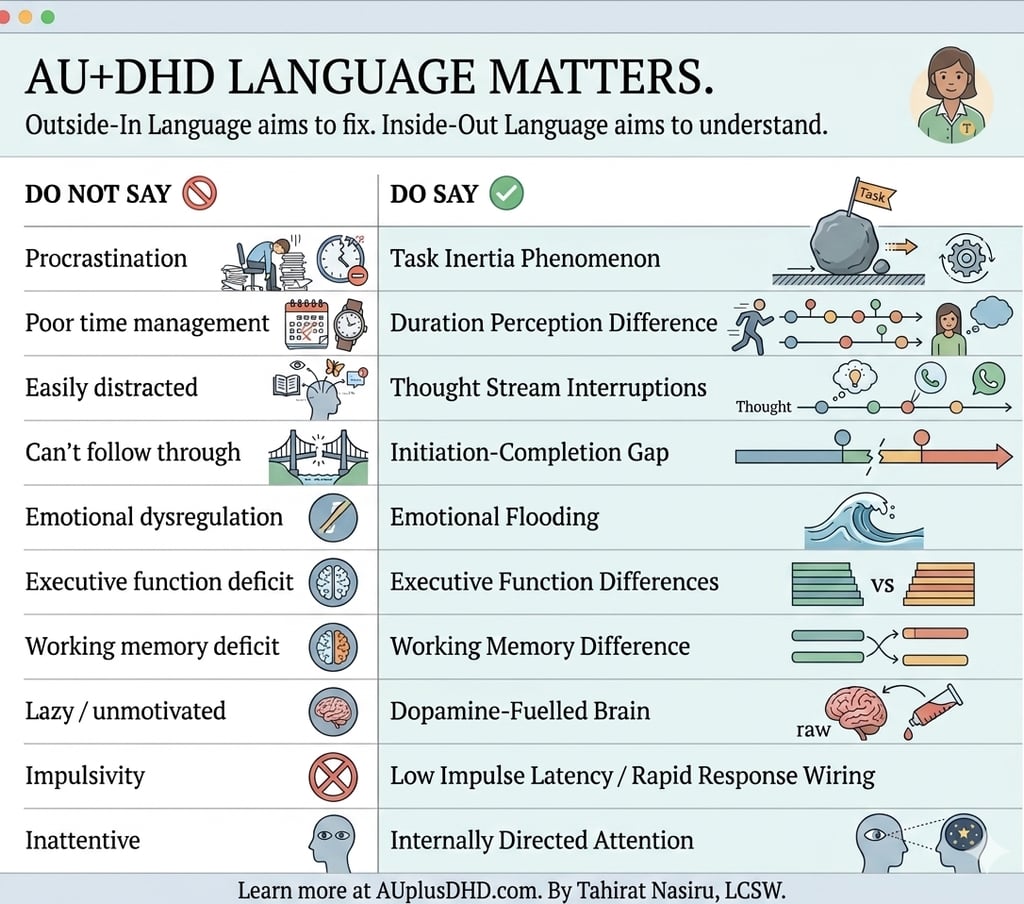
Try The Interactive Flip card
Click on each flip card to view its reframed alternative
Who This Is For
Neurodivergent Individuals: To help you understand your patterns without defaulting to self-blame
Families & Partners: To help you interpret behavior more accurately and respond with clarity instead of frustration
Clinicians & Educators: To support a more precise, affirming, and effective lens in your work.
A Simple Shift You Can Start Today
Before labeling a behavior, pause and ask: “If this wasn’t a character flaw… what else could be happening here?” That question is the beginning of the shift.
Important Note
These reframes are not about ignoring challenges. They are about:
describing them more accurately
understanding the mechanisms behind them
responding in ways that actually support change
When we change the language, we change the lens. When we change the lens, we change the outcome.

"A picture is worth a thousand words"

Explore
⚠️ Educational notice: Learning how your brain works can support self-understanding, reduce shame, and help you advocate for your needs. Educational resources do not replace individualized professional support. For many people, education, therapy, coaching, medication, accommodations, and community support work together. Read the educational disclaimer.
Terms of Use
© 2026 AUplusDHD , a project of TNAZ Designs & Services, LLC. All rights reserved.
Support
Legal